| Welcome to this edition of The Hindu on Books Newsletter. On January 30, 1948, as Mahatma Gandhi entered the lawn of Birla House in New Delhi to lead evening prayers on the lawn, Nathuram Godse surged through the assembled crowd, stood in front of Gandhi and fired three shots in quick succession. "When the second and third shots rang out, Gandhi collapsed, uttering his last cry, 'Hey Ram!'"-- Dhirendra K. Jha's new book, Gandhi's Assassin, The Making of Nathuram Godse and his Idea of India (Vintage/Penguin) begins with the assassination, and based on research and evidence, he shows that Godse was closely linked to the Rashtriya Swayamsevak Sangh (RSS) and a key part of V.D. Savarkar's world. In 18 chapters, he traces the life and times of Godse, leading up to the killing of the father of the nation, and the aftermath. Within twenty four hours of Gandhi's assassination, Jha writes that the RSS and the Hindu Mahasabha were looking for ways that might save them from ruin. "All through, it had spewed venom against him and had even wished his death when he sat on fast a fortnight before the assassination. Rattled by the people's fury, the RSS now did a one-eighty and M.S. Golwalkar quickly claimed that his organisation believed in the 'doctrine' of Gandhi." He issued a statement that "placed the responsibility for the assassination in a generalised context and made no reference to Godse—perhaps the assassin's parent organisation lacked the courage to own up to the fact that he was its member." Savarkar, too, contends Jha, deserted his ardent follower and protégé. In his book, Usne Gandhi ko Kyun Mara, which has been translated into English, Why They Killed Gandhi: Unmasking the Ideology and the Conspiracy (Speaking Tiger). Ashok Kumar Pandey also presents evidence to argue that Savarkar knew about the Gandhi murder conspiracy. In reviews this week, we read about Gandhi's ideals of truth and non-violence, a reporter's account of the Bangladesh Liberation War, tales from Hazaribagh, and a new book of fiction which examines the ethics of modern education. We carry an essay by Anirudh Kanisetti on his new book, Lords of the Deccan: Southern History from the Chalukyas to the Cholas (Juggernaut), and an excerpt; and interview Nabaneeta Dev Sen's daughter Nandana Dev Sen about her mother's poems and why they exemplify her belief that poetry is central to women's freedom.
(Was this newsletter forwarded to you? Subscribe to get it in your inbox. Subscribe here.)
Books of the week  The idea of non-violence or ahimsa was central to Mahatma Gandhi's beliefs. From the railway platform in Pietermaritzburg, to the indigo plantations of Champaran, the response to Chauri Chaura, and the salt march at Dandi, it underpinned his steadfast resistance to injustice and guided him on every step of his leadership of the freedom struggle. If Gandhi's ahimsa was central to his ethical vision, this vision was situated deep within his religious beliefs, and derived metaphysical force from them, as Jyotirmaya Sharma outlines in his new book, Elusive Non-Violence: The Making and Unmaking of Gandhi's Ahimsa. In her review, Uma Mahadevan-Dasgupta writes that in tracing the evolution of Gandhi's ahimsa as a fundamentally religious ideal situated within his beliefs about Hinduism, Sharma discovers a profound consistency. "If Gandhi's politics were shaped by religious belief, his religion was expressed in his actions. As an interpreter and reformer of Hinduism for his times, his religion had less to do with theology and more to do with the heart. At the core of his religion was peace."  'Elusive Non-Violence: The Making and Unmaking of Gandhi's Religion of Ahimsa' review: The ideal of non-violence 'Elusive Non-Violence: The Making and Unmaking of Gandhi's Religion of Ahimsa' review: The ideal of non-violence When the Calcutta newspaper, The Statesman, sent a young cub reporter Manash Ghosh to the India-East Pakistan border at Petrapole-Benapole (in Bengal) for the Second Asian Highway Car Rally on November 15,1970, it didn't know that he would come away with a chronicle of the tumult ahead foretold. At the rally, he ran into people willing to disclose what was happening in then East Pakistan. From them, he gleaned information on reasons that led to Field Marshal Ayub Khan's downfall, caused mostly by a mass upheaval in East Pakistan, General Yahya Khan's rise to power, and Sheikh Mujibur Rahman's six-point autonomy movement. Ghosh was soon asked to officially cover the happenings in East Pakistan and the veteran journalist has written Bangladesh War: Report from Ground Zero (Niyogi Books) on his experience. The reviewer, K.R.A. Narasiah, who was with the Eastern Naval Command during the liberation war, says the book is a page-turner and his account of India's role in Bangladesh's freedom struggle, the training of the Mukti Bahini and a boat ride across the Padma river to cover a story makes for remarkable reading. 'Bangladesh War: Report from Ground Zero' review: A ringside view of the Bangladesh liberation war  Love is an important way of understanding Mihir Vatsa's gaze on his hometown and Jharkhand's hill station, Hazaribagh, says Neha Sinha in her review of Tales of Hazaribagh (Speaking Tiger). The book is all about Hazaribagh, a place that does not occur much on lists of places to see in India, not too beautiful, nor too popular, but always interesting. "In this self-assured non-fiction debut, Vatsa is possessive about his Hazaribagh, yet refusing to do the obvious—to romanticise or prettify it. In resisting the travelogue trope of rose-tinted glasses, he chooses not to condescend on the present. His gaze is not just his view of the landscape – plateau dotted with a town, lakes, waterfalls and rocky escarpments – but is also responsive to how the area changes him. What we get in this frequently surprising book is a vocabulary of love for a home which cannot always stand steadfast to the forces of change." 'Tales of Hazaribagh' review: In search of Hazaribagh Saikat Majumdar's new novel, The Middle Finger (Simon & Schuster), an exploration of the ethics of education, raises fundamental questions as it invokes the story of Eklavya from the Mahabharata. The protagonist is Megha, an Indian woman who has drifted out of the doctoral programme at Princeton to teach basic English writing to students at a U.S. State university and also write powerful poetry. Later, she returns to Delhi to help set up a private university which caters to well-heeled Indian students "on their way to Yale…", and thereby hang tales of the past and present, and how it's not easy to shake free of old ways. In her review, Uma Mahadevan-Dasgupta says the question at the heart of the novel is whether there is poetry for those who have not been 'taught' to read it. "The answer, of course, is yes; because, as one of the characters realises, 'There are different ways one can exist in the world'." A white brilliance: Uma Mahadevan-Dasgupta reviews Saikat Majumdar's 'The Middle Finger' Spotlight 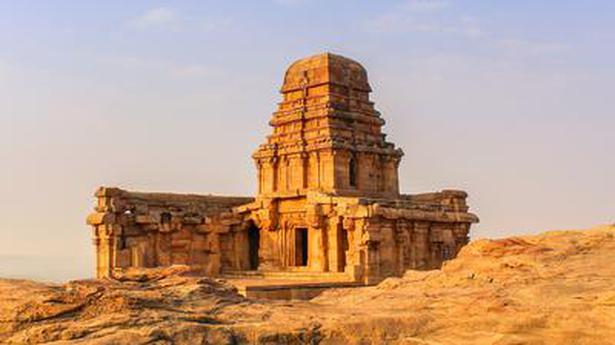 The Chalukya emperors and their successors reigned over the vast Deccan plateau for 500 years, and yet, they mostly remain unknown, a gap Anirudh Kanisetti aims to fill in his new book, Lords of the Deccan. In an essay, he writes that the Chalukya emperors and their successors transformed the Deccan from a "dusty, anarchic region to an irrigated, urban, artistically sophisticated, and highly connected landmass that profoundly shaped the history of India and the world." The lords of this land, says Kanisetti, maintained their primacy through transplanting into their territories ideas and talent from across the world. "This legacy can be seen quite clearly in their buildings: for example, the architecture of early Chalukya cave temples in Badami is inspired by Ajanta. But the sculptures there, especially those of Vishnu's avatars, were adopted from distant Madhya Pradesh. Why? Because rulers in Madhya Pradesh had innovated a visual idiom identifying the king with Vishnu, thus presenting themselves as saviours; the Chalukyas recognised its value as a political tool, and had their artists emulate it." The rich history of the Chalukya dynasty 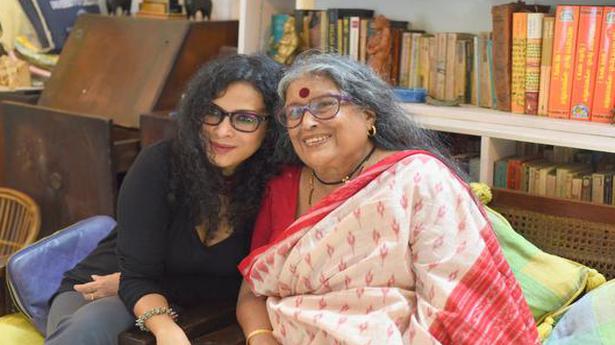 Nabaneeta Dev Sen wrote poetry, novels, short stories, plays, literary criticism, travelogues, translations and children's books. But her daughter, Nandana Sen, says she identified herself as a poet, in the introduction to a recently released poetry collection, Acrobat, which contains poems Nabaneeta wrote in English, a few she translated from Bengali, and some she translated with Nandana. "Ma carried her kobitar khata (poetry notebook) everywhere, so she was always prepared for poetry to come to her – and it often did in the oddest of hours and places," she tells Anusua Mukherjee in an interview. "Throughout her career, Ma wrote stunningly powerful poems (and fiction) that spoke out against gender-based violence and injustice, many of which are included in Acrobat." 'Ma carried her poetry notebook everywhere': Nandana Dev Sen Browser- The Mahabharata has never ceased to excite the Indian imagination, and has been translated into numerous languages including Marathi, Kannada, Assamese, Tamil, Urdu, Gujarati, Bengali and Malayalam. Prof. G.N. Devy explains what accounts for its incredible effect on the subconscious of millions of Indians through several generations in Mahabharata: The Epic and Nation (Aleph).
One of China's most daunting challenges was linguistic: how to make it accessible to a globalised, digital world. Jing Tsu follows the bold innovators who adapted the Chinese script to the technological advances, from the telegram to the typewriter to the smartphone in Kingdom of Characters (Penguin).
When Maneka Pataudi is arrested as the prime suspect for the murder of her ex-husband, she reveals a chilling tale of marital abuse and neglect. Is her confession the truth or a lie? Based mostly on true events, Meghna Pant's Boys Don't Cry (Penguin eBury Press) takes us behind the closed doors of a modern Indian marriage.
- In the story of the only woman emperor to rule from the throne of Delhi, Shehzadi Razziat is sharp of mind and steely in her resolve to prove herself worthy. But mid-13 century Delhi is not an easy place for a woman, as Meena Arora Nayak outlines in A Dust Storm in Delhi (Tranquebar).
 That is all for this week. We look forward to hearing from you, be it about this newsletter, our reading list, your literary queries or the book you are reading now. You can find us at www.thehindu.com/books and on Facebook and Twitter at @TheHinduBooks. |

 Open in browser
 More newsletters
Post a Comment
Thanks